



Flamingo skull
The flamingo is a bird species belonging to the stork family of the stork order, with a total of six species under its genus. It is a large waterfowl with a body length of 1-2 meters; The neck and feet are long, the mouth is short and thick, slightly curved downwards. They mainly live in Africa, South America, and India. It often inhabits shallow waters of salt lakes, swamps, and lagoons in warm and tropical regions. It is a bird that lives by water and likes to live in groups. Mild temperament, timid and alert. Once an enemy situation is detected, it will chirp and fly into the sky. As long as one flies up, the rest will follow closely, chirping while flying. Eating shrimp, clams, insects, algae, etc. They are a very ancient family of birds, with their presence dating back to 40 million years ago.
Fox Skull - Closed Mouth
Vulpes: a genus of mammals in the order Carnivora and family Canidae. The body length is 45-90 centimeters, the tail length is 25-60 centimeters, the weight is 2-10 kilograms, and the largest one exceeds 15 kilograms. The female animal is slightly smaller in size than the male animal. Medium and symmetrical body shape, slender limbs, toe mobility, conducive to fast running. There are 12 species in the world and 3 species in China, namely the red fox, sand fox, and Tibetan fox. They mostly inhabit the banks of forests, grasslands, hills, wastelands, valleys, lakes, and caves in semi desert areas. Foxes usually move alone and mainly live in pairs or families. I like a dry and clean environment.

Chicken skull
Chicken is a domestic poultry belonging to the pheasant family in the order Galliformes. There are about 100 species and over 300 varieties of chickens in the world; Domestic chickens originated from wild chickens, with short, sharp, and slightly curved beaks; Having a crown and a fleshy beard;; Long neck and flexible rotation; Wings underdeveloped, feet strong; The forelimbs have degenerated into short wings, but they can hardly fly. It is a social animal with a gentle personality. It likes to explore and move around in grass and sand, and does not fly very high. Therefore, it is suitable for raising in a courtyard. Omnivorous animals not only peck at insects in the wild, but also consume small feed prepared by farmers. The early purpose of raising chickens was also for entertainment and viewing purposes, such as "cockfighting".

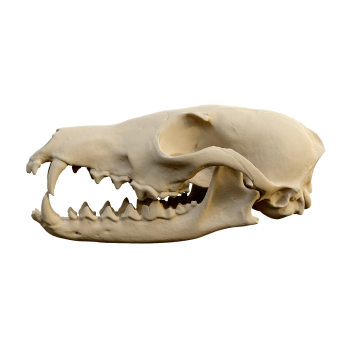
Fox Skull - Open Mouth
Vulpes: a genus of mammals in the order Carnivora and family Canidae. The body length is 45-90 centimeters, the tail length is 25-60 centimeters, the weight is 2-10 kilograms, and the largest one exceeds 15 kilograms. The female animal is slightly smaller in size than the male animal. Medium and symmetrical body shape, slender limbs, toe mobility, conducive to fast running. There are 12 species in the world and 3 species in China, namely the red fox, sand fox, and Tibetan fox. They mostly inhabit the banks of forests, grasslands, hills, wastelands, valleys, lakes, and caves in semi desert areas. Foxes usually move alone and mainly live in pairs or families. I like a dry and clean environment.

Wolf skull
Wolves are carnivorous animals in the family Canidae. There are a total of 11 subspecies. Medium and symmetrical body shape, slender limbs, toe mobility, conducive to fast running. The head and palate are pointed, the face is long, the nose protrudes, the ears are pointed and upright, the sense of smell is sensitive, and the hearing is developed. Canine teeth and split teeth are well-developed. The fur is thick and long. The forefoot has 4-5 toes, while the hind foot usually has 4 toes; Claws are thick and dull, unable to stretch or slightly able to stretch. Hairy tail, more developed. It is a nocturnal animal that is good at running quickly and over long distances. It prefers to live in groups and often curls up alone or in pairs in caves during the day. However, it also comes out for activities during the day in sparsely populated areas. Come out at night to search for food.

beluga
The beluga whale is a mammal of the genus Beluga in the family Cetidae, also known as the Beruka whale or the sea canary. White whales are roughly distributed around the Arctic region, with the vast majority living in the waters north of Europe, Alaska, and Canada. It is a highly social animal with a tight grouping structure, usually grouped by peers and the same sex, and there are also smaller mother son pairs. Beluga whales are known for their varied calls and rich facial expressions. Whales have enormous economic value. Since the 17th century, the hunting of white whales by whalers has led to a sharp decline in their population and has been recognized as CITES by the Washington Convention Organization. White whales are second-class protected animals in China.

Unicorn whale
The unicorn whale is a deep-water animal in the family Characidae of the order Cetiformes. It has a small and round head, an indistinct beak, a protruding forehead, and a slight upward tilt in front of its mouth. Most male unicorn whales will grow a long tooth from the left side of their upper jaw after the age of one, which is called a unicorn whale because it resembles the horn of a wild animal; Most female whales do not have teeth. Unicorn whales mainly live in the northern end of the Atlantic Ocean and the Arctic Ocean, and have also been found in small quantities in the Greenland Sea, mostly living north of the Arctic Circle. Unicorn whales are social animals, and there are strict boundaries between populations. The food of unicorn whales includes flatfish and Arctic cod. The biggest natural enemy of unicorn whales is humans.

beluga
The beluga whale is a mammal of the genus Beluga in the family Cetidae, also known as the Beruka whale or the sea canary. White whales are roughly distributed around the Arctic region, with the vast majority living in the waters north of Europe, Alaska, and Canada. It is a highly social animal with a tight grouping structure, usually grouped by peers and the same sex, and there are also smaller mother son pairs. Beluga whales are known for their varied calls and rich facial expressions. Whales have enormous economic value. Since the 17th century, the hunting of white whales by whalers has led to a sharp decline in their population and has been recognized as CITES by the Washington Convention Organization. White whales are second-class protected animals in China.

beluga
The beluga whale is a mammal of the genus Beluga in the family Cetidae, also known as the Beruka whale or the sea canary. White whales are roughly distributed around the Arctic region, with the vast majority living in the waters north of Europe, Alaska, and Canada. It is a highly social animal with a tight grouping structure, usually grouped by peers and the same sex, and there are also smaller mother son pairs. Beluga whales are known for their varied calls and rich facial expressions. Whales have enormous economic value. Since the 17th century, the hunting of white whales by whalers has led to a sharp decline in their population and has been recognized as CITES by the Washington Convention Organization. White whales are second-class protected animals in China.

Jurassic Giant Dinosaur Brachiosaurus 3D Model
Brachiosaurus is a general term for the "Brachiosaurus" dinosaurs of the Jurassic period. The body length is 25 meters, the height is 15 meters, the weight is 30 tons, the tail is thick and short, the head is very small, the neck is very long, and the shape is similar to that of a giraffe. There are large claws on the inner side of the foreleg. The jaw is well developed, covered with 52 teeth up and down, and the edges of the teeth are sharp. The limbs are thick and strong. The nostrils are on top of the head. It is named for its long forelimbs.

Popular Models
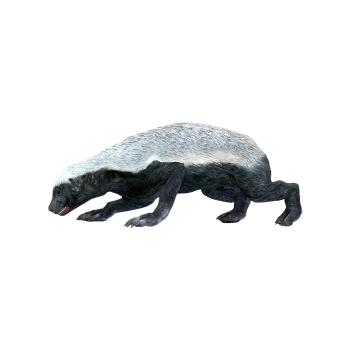
Honey Badger (3D animated model)
192 View
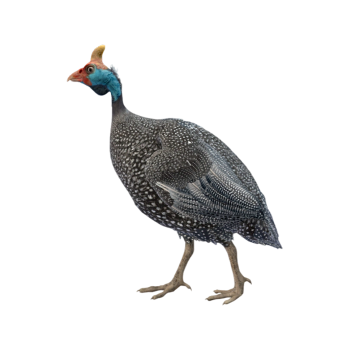
Guinea fowl (3D animated model)
163 View
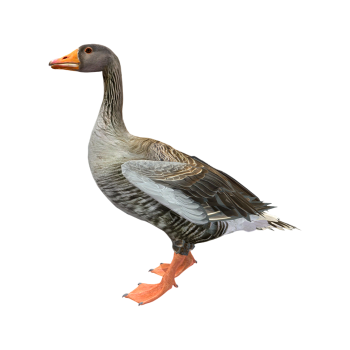
Wild Goose (3D animated model)
185 View
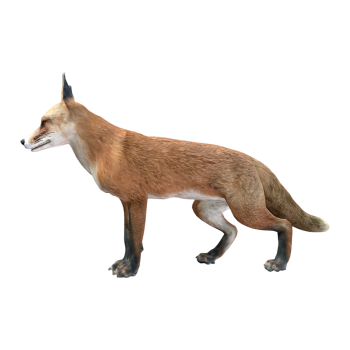
Red Fox (3D animated model)
153 View
Random Model

Bolt cutting pliers
779 View

vintage tire inflator
566 View

Nintendo Game & Watch Portable
873 View


round glasses
748 View


Philips hair dryer
893 View